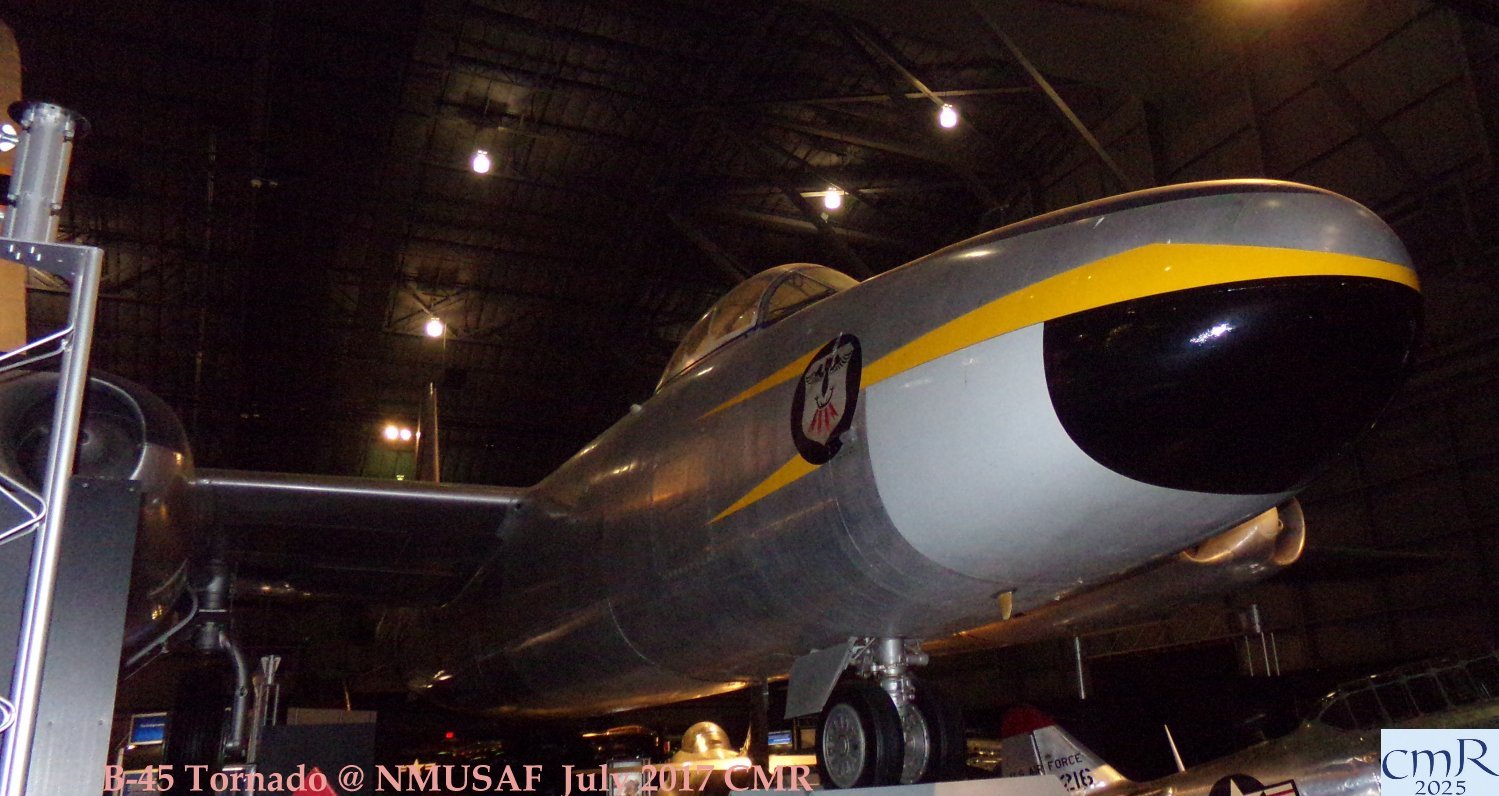
North American B-45 Tornado

The B-45 was the first American jet bomber design to actually enter service, and although obsolete and out of service by the late 1950s, the type filled an important stopgap role in the early Cold War years, giving the USAF a tactical nuclear delivery capability in Europe for the first time, and the high-flying RB-45C recon models brought back important imagery of the USSR before the U-2 was available.

Replaced by the B-66 Destroyer, most surviving B-45s were quickly disposed of, but a new, including the NMUSAF's example, were flown as engine testbeds into the early 1970s. enter image description here
F-86H Sabre at Chippewa, PA

The F-86H "Sabre Hog" was the last of the series to remain in service with the Air National Guard, the final examples not being retired until 1970, and even then some examples were transferred to Navy control for use as adversary aircraft and later drones.

Powered by a General J73 in place of the GE J47s used on earlier USAF Sabres, the F-86H also had a reinforced airframe, and the capability to carry tactical nuclear weapons. Most examples had a quartet of 20mm in place of the six .50 caliber machine guns carried by most American F-86s.

This particular airframe is preserved on a pole at the Beaver County Airport at Chippewa PA, and is seen in 2005. Closeup F-86H Sabre forward fuselage

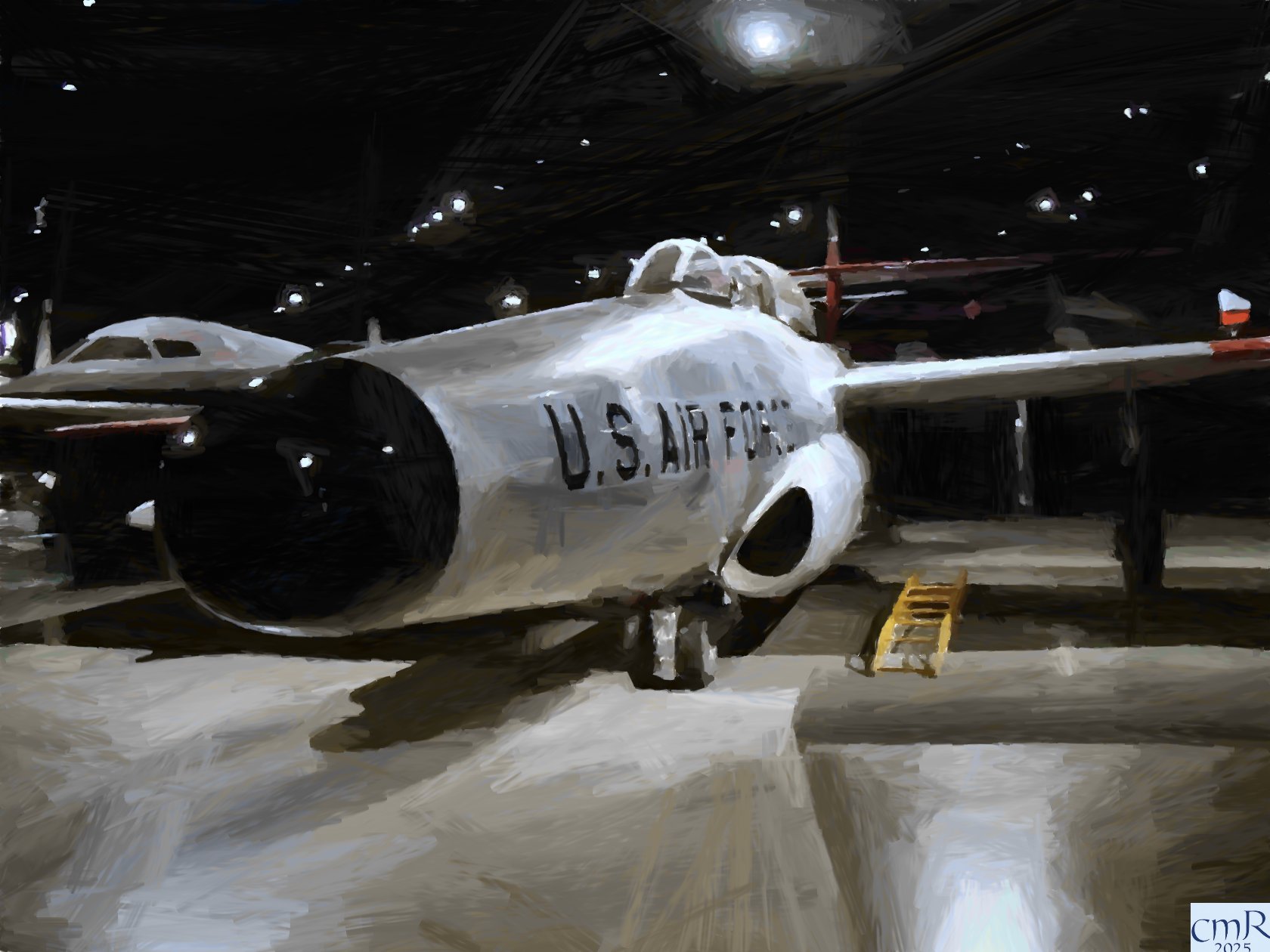
F-89J Scorpion at NMUSAF

Conceived of in the immediate aftermath of WWII to replace the piston-engined P-61 Black Widow as an interceptor, Northrop's F-89 Scorpion was made obsolete as Century-series interceptors entered service, but Air National Guard units continued to operate the type until as late as 1968. The NMUSAF's missile-armed F-89J model is seen in the facility's Cold War Gallery. F-89J Scorpion displayed at NMUSAF